Start with the job, not the device category
| Question | Panel | Face mask |
|---|---|---|
| Area | Can be repositioned for the face or other body areas; usable coverage depends on panel dimensions, distance and beam distribution. | Purpose-shaped for the face. It does not replace a panel if your actual priority is a larger or different body area. |
| Geometry | You set distance and angle, so repeatability depends on your setup. A stand or mounting arrangement may matter. | The fit sets the emitter-to-skin geometry. Gaps, facial contours and eye or nose fit can affect comfort and exposure distribution. |
| Routine | May suit a fixed treatment location, but setup and holding position can add friction. | Often portable and hands-free, but straps, pressure, heat, glare and controller placement can make or break regular use. |
| Specifications | Distance-specific output can be useful when the method and treatment-plane coverage are reported. | Close placement does not remove the need for output, exposure-time and uniformity information. |
| Value | One device may serve several areas, but larger units, stands and shipping can cost more. | A face-only device may be convenient, but fit is personal and a poor fit can undermine the value of otherwise impressive specifications. |
| Evidence fit | For either device, look for human evidence matching the intended outcome and enough protocol detail to judge whether the consumer device meaningfully resembles what was studied. | |
- you want to use one device across more than the face;
- you can create a repeatable distance and angle;
- physical coverage and mounting suit your space.
- your intended application is specifically facial;
- portability and a wearable routine matter;
- you can confirm fit, instructions and return options.
- the seller gives wavelengths but no usable protocol;
- the evidence cited concerns a different outcome;
- safety instructions or Australian support are unclear.
What specifications do—and do not—tell you
Wavelength identifies part of the light; it does not identify the treatment. Irradiance describes radiant power arriving per unit area, while radiant exposure combines irradiance and time when output is stable. A useful protocol also needs the treatment area, distance or contact geometry, exposure schedule and anatomical location. A radiometry review found those details were often missing even from published PBM papers.[1] A separate parameter review likewise found substantial variation across wavelength, irradiance, energy, pulse mode, duration and repetition.[2]
Distance changes more than one number. With a panel, moving closer or farther changes the treatment-plane field and may change how beams from multiple LEDs overlap. With a mask, the emitters may sit close to the skin, but facial curves and gaps mean “close” is not necessarily uniform. A single centre-point irradiance value cannot describe the whole illuminated area; the radiometry review specifically warns that LED irradiance can be non-uniform and depends on distance.[1]
Do not translate a panel reading into a mask session—or vice versa—by arithmetic alone. Even a correctly calculated surface radiant exposure does not prove equivalent tissue exposure, coverage or biological effect. Instrument, spectrum, beam profile, angle, contact, skin surface and the study protocol remain relevant. This is why PLT does not rank form factors by the largest irradiance headline.
Understand irradiance, distance, time and incident radiant exposure →
Read the wavelength explainer →
What two household-owned masks taught us about usability
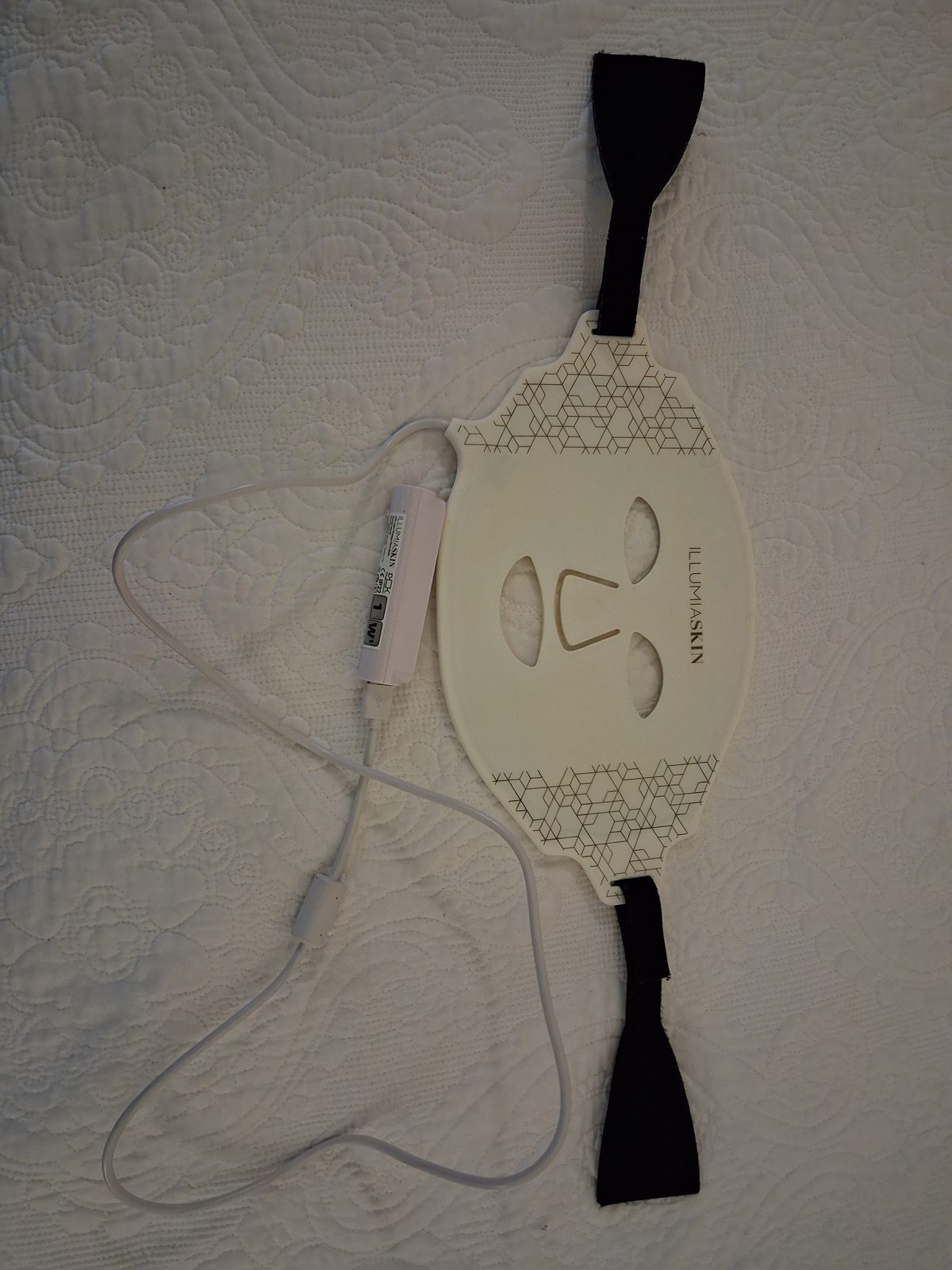
IllumiaSkin 7+1 Colour LED Face Mask (MK-05)
A flexible LED face mask owned in the PLT household and identified from its surviving packaging as model MK-05.
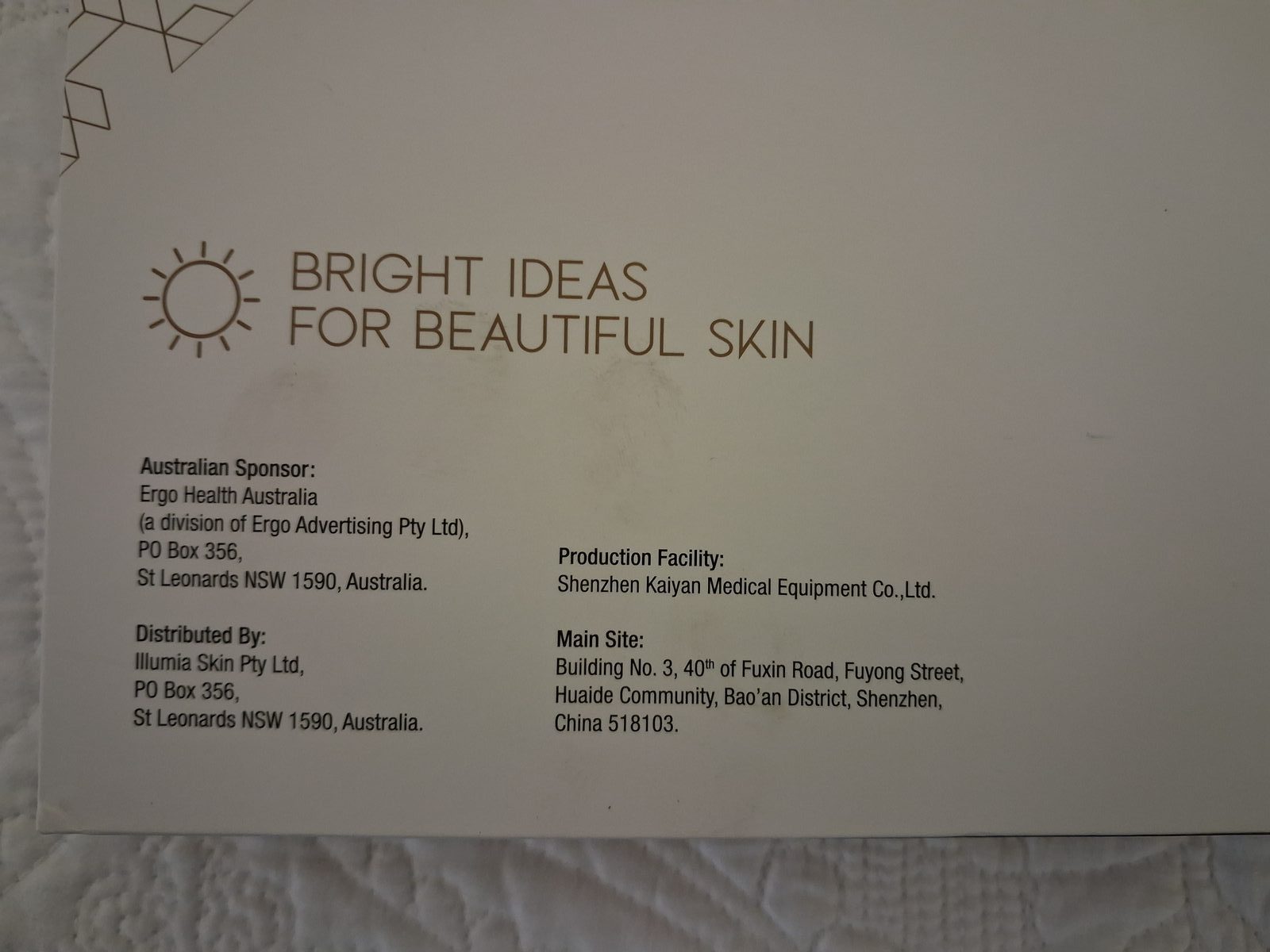
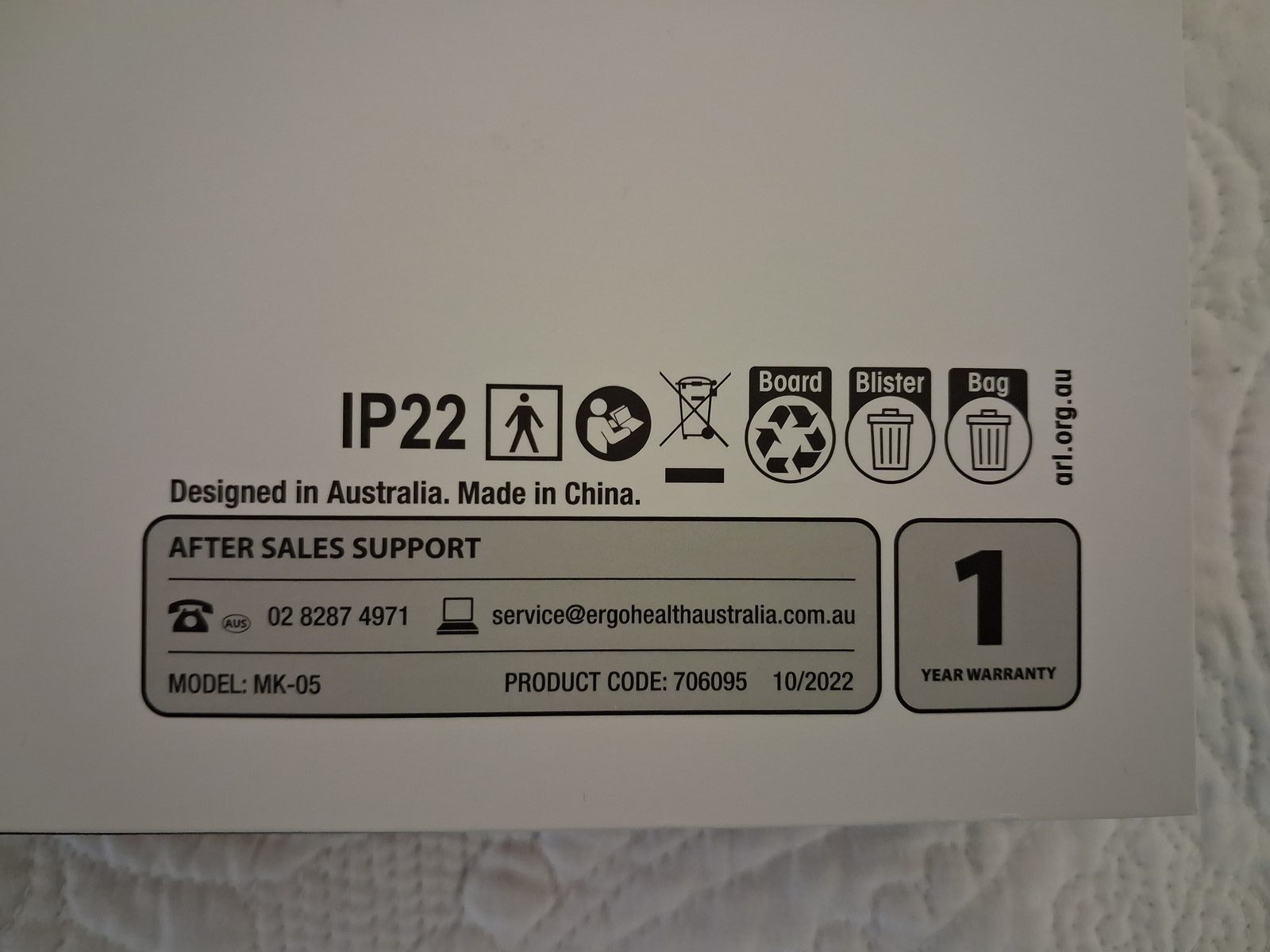
- Packaging label Packaging identifies the product as the IllumiaSkin 7+1 Colour LED Face Mask, model MK-05, product code 706095, dated 10/2022.
- Packaging label Packaging names Ergo Health Australia as Australian sponsor, Illumia Skin Pty Ltd as distributor and Shenzhen Kaiyan Medical Equipment Co., Ltd as production facility.
- PLT owned / observed The owned mask has a soft, flexible body, head straps, USB-C cabling and a smaller, simpler controller than the older owned mask.
- Household user experience The regular household user reports that this mask feels lighter and more comfortable than the older owned mask and is currently used frequently, typically almost nightly.
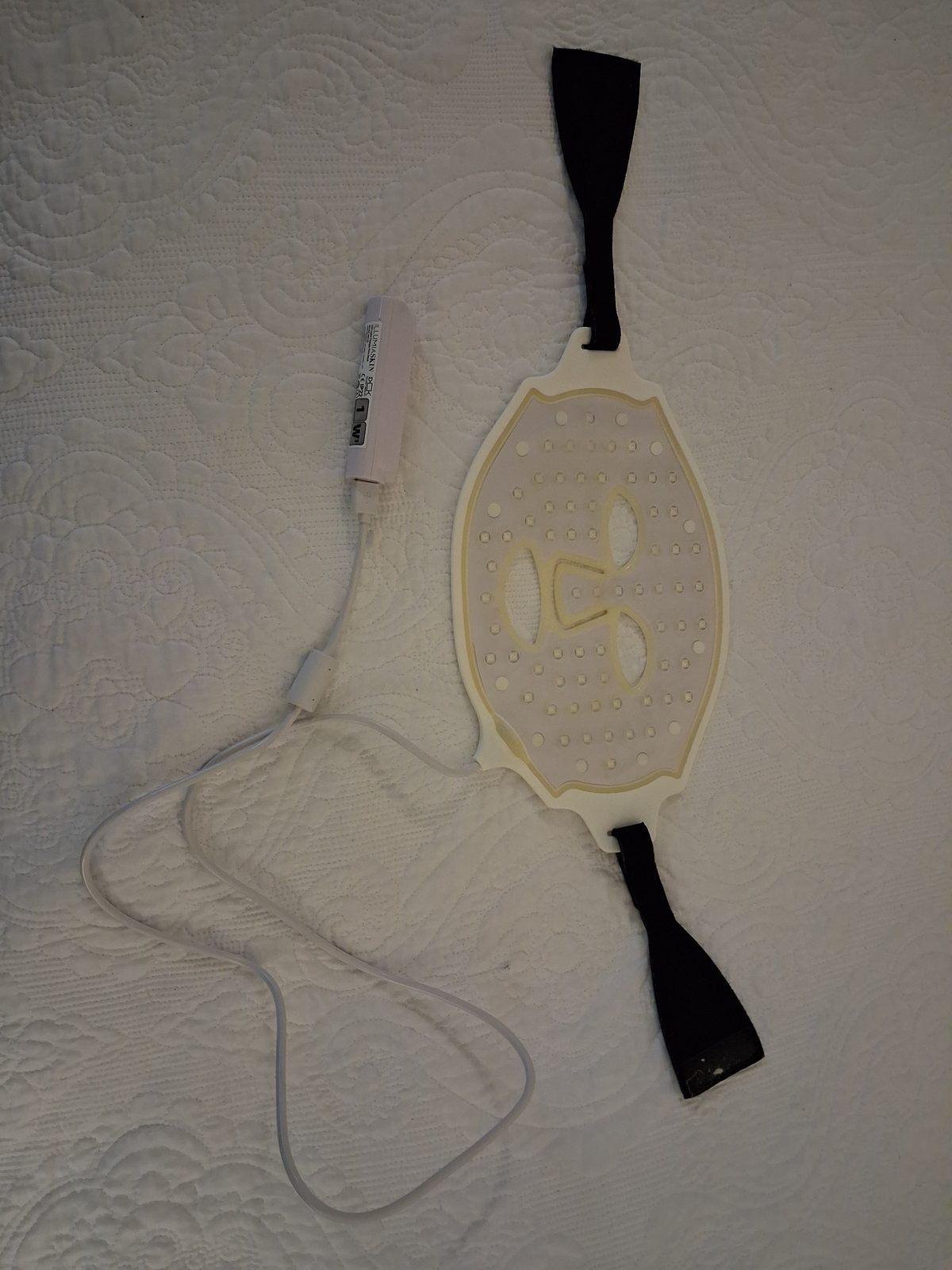
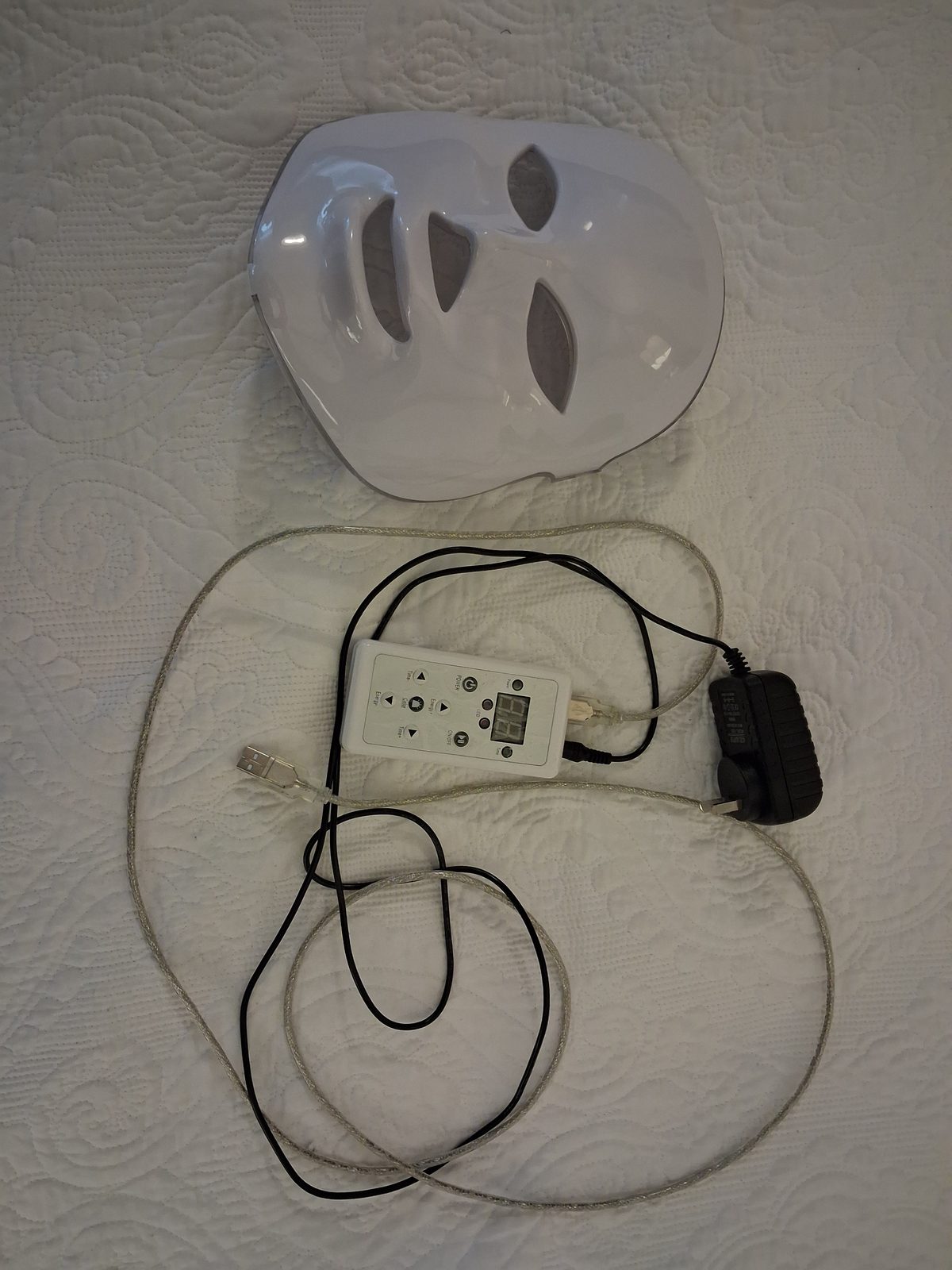
Older unidentified rigid LED face mask
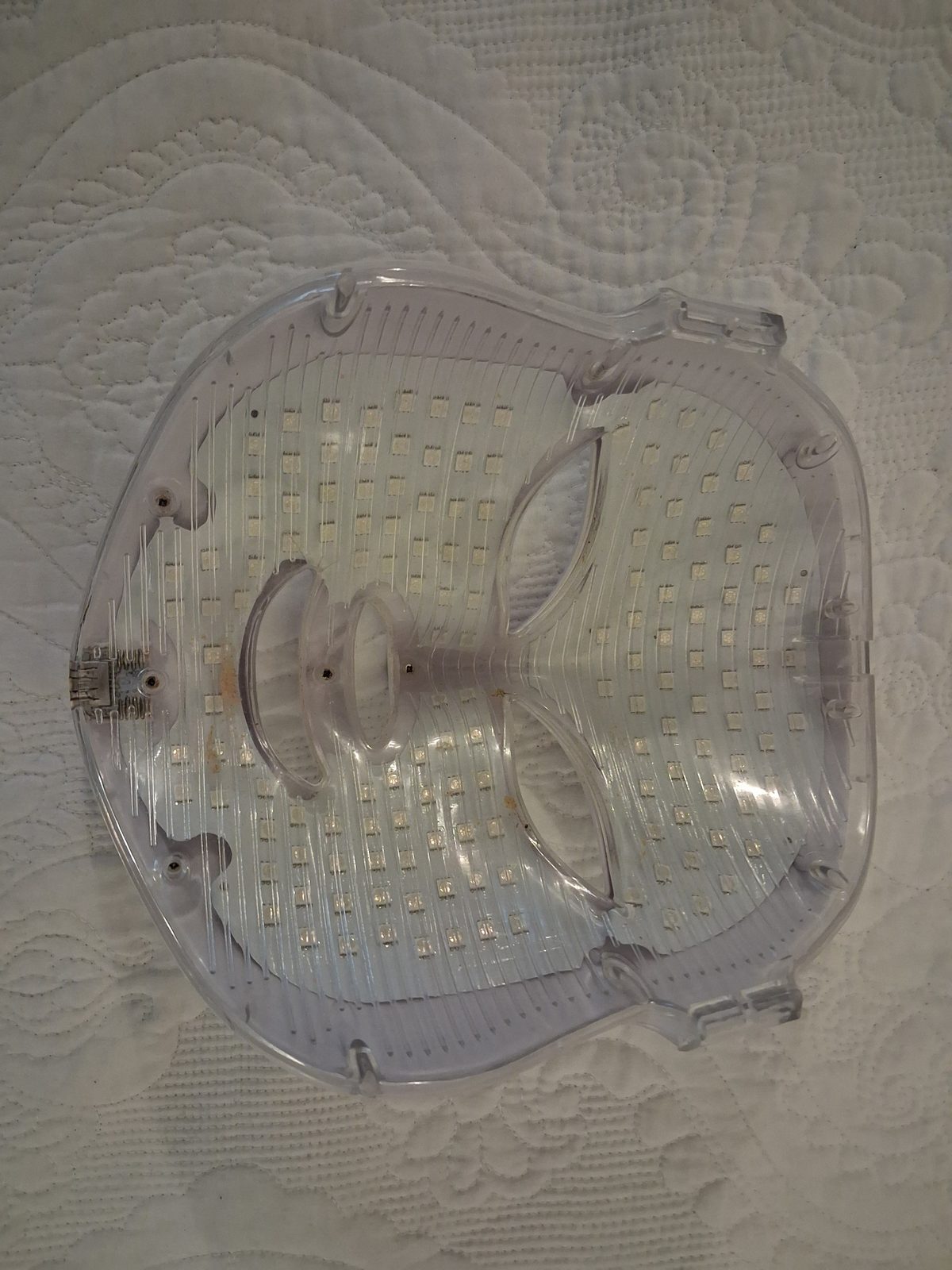
An older rigid LED face mask owned by PLT whose maker and model cannot be established from the available photographs.
- PLT owned / observed The device has a rigid moulded shell, a visible discrete LED array, a larger external controller arrangement and USB-A connection/cabling.
- Household user experience The regular household user reports that the older mask felt heavier and less comfortable and was used substantially less often than the newer flexible mask is now.
- Owner maintenance experience While the mask was still in regular use, the female USB-A connector became unreliable and the owner opened the mask and re-soldered the connector at least once.
- Owner recollection The owner recalls paying approximately one quarter of the newer mask’s price for this device, but no purchase record or exact price is available.
What the comparison can—and cannot—show
The regular user prefers the newer flexible mask’s feel and uses it much more often. That is meaningful buying context: a device that fits a routine has a practical advantage over one left unused. It is still one person’s report, and PLT has not established that flexibility alone caused the difference.[10]
The two masks also occupied different generations and price/quality positions. The owner remembers the older rigid mask costing roughly one quarter as much, but no receipt or exact price record is available. Its lower remembered cost, long useful service and repairable connector are relevant to value; they also make this an uncontrolled comparison. We cannot conclude that flexible masks are inherently more comfortable, USB-C is inherently more reliable, or newer masks are always better made.[11]
The IllumiaSkin packaging establishes a name, model, product code, 10/2022 date and named organisations.[8] It does not establish wavelengths, irradiance, present regulatory status or effectiveness. PLT therefore leaves those fields empty rather than filling them from an unrelated listing.
What facial LED evidence supports
Human evidence exists for some defined facial LED protocols, but it is not one uniform body of “red-light mask evidence”. A 2018 systematic review found 31 randomised LED trials across several dermatological uses. It described varied devices and parameters, with small samples, missing blinding or sham controls, and inconsistent treatment settings among some studies.[3]
One 2007 randomised split-face study allocated 76 people with facial wrinkles across 633 nm, 830 nm, combined or sham settings and reported improvements from baseline in active groups after a specific twice-weekly protocol.[4] It was not a consumer mask-versus-panel trial, and sharing one wavelength does not make another product equivalent.
More directly, a 2025 multicentre double-blind study randomised 60 adults to one home-use 630 nm/850 nm mask or a lower-output sham for 16 weeks and reported between-group differences in crow’s-feet assessments from week eight.[5] That supports further attention to a particular home-mask protocol and outcome. It does not establish that every mask works, that a mask is superior to a panel, or that the result transfers to acne, pigmentation, sleep or another goal.
The evidence gap that matters to this purchase
PLT found no credible head-to-head human trial showing that consumer panels are generally better than masks, or vice versa. The defensible question is whether a particular device’s protocol, geometry and intended use resemble the evidence for the outcome you care about.
Read PLT’s full synthesis of human facial-skin evidence and consumer-mask transferability →
Safety, instructions and Australian buying checks
Do not improvise around a bright face-worn device. ARPANSA notes that LED eye hazard can depend on intensity and exposure time and that some medicines can photosensitise skin; it also warns against using cosmetic light treatment to mask a suspicious skin condition.[6] Follow the exact device instructions for eye protection, contraindications, session length, cleaning and stopping conditions. Seek professional advice for an eye condition, photosensitivity, prescription medicines, a concerning skin lesion or a medical treatment goal.
Instructions are device-specific. As one current manufacturer example—not independent evidence—Omnilux publishes a particular wavelength pair, output claim, treatment schedule and separate contraindication/drug-interaction material for its Contour Face mask.[7] Those instructions belong to that product. They should not be copied to either PLT-owned mask or to a panel.
The household user’s almost-nightly IllumiaSkin routine is reported only as adherence context. PLT has not verified the original MK-05 instructions and is not endorsing that frequency.
For an Australian purchase, check the exact model, local seller or sponsor, power/charging requirements, warranty, return freight and whether you can return a mask that does not fit comfortably. Packaging that names an Australian sponsor does not by itself prove current ARTG inclusion or support a health claim. Use the Australian regulatory-terms guide to verify that distinction, and the Australian buying guide for broader landed-cost and support questions.
A six-question decision checklist
- What exact area and outcome am I buying for? “General wellness” is too vague to match a device to evidence.
- Would I use it consistently as instructed? Consider setup, fit, glare, pressure, heat, controller placement, cleaning and storage.
- Is output reported at the treatment plane? Look beyond peak or centre-point numbers to distance, method and coverage.
- Does the cited human evidence match this outcome and protocol? A wavelength match alone is insufficient.
- Are safety instructions complete? Check eye guidance, photosensitivity, medicines, contraindications and when to stop.
- What happens if fit or support disappoints? Confirm the Australian return, warranty and repair path before purchase.
Continue your research
- Understand dose, irradiance, distance and time
- Compare PLT’s researched Australian panel shortlist
- Compare the first Australian LED face-mask shortlist
- Understand photobiomodulation and dose basics
- Read the red and near-infrared wavelength explainer
- Browse the evidence library and study limitations
- Review the human facial-skin evidence in depth
- See how PLT separates research, experience and testing
Sources and references
- Mohammed A. Hadis et al.. The dark art of light measurement: accurate radiometry for low-level light therapy. Lasers in Medical Science. 2016-03-10. DOI: 10.1007/s10103-016-1914-y. PMID: 26964800. Accessed 2026-09-08.
- Randa Zein, Wayne Selting, Michael R. Hamblin. Review of light parameters and photobiomodulation efficacy: dive into complexity. Journal of Biomedical Optics. 2018-12-01. DOI: 10.1117/1.JBO.23.12.120901. PMID: 30550048. Accessed 2026-09-08.
- Jared Jagdeo et al.. Light-emitting diodes in dermatology: A systematic review of randomized controlled trials. Lasers in Surgery and Medicine. 2018-01-22. DOI: 10.1002/lsm.22791. PMID: 29356026. Accessed 2026-09-08.
- Seung Yoon Lee et al.. A prospective, randomized, placebo-controlled, double-blinded, and split-face clinical study on LED phototherapy for skin rejuvenation. Journal of Photochemistry and Photobiology B: Biology. 2007-07-27. DOI: 10.1016/j.jphotobiol.2007.04.008. PMID: 17566756. Accessed 2026-09-08.
- Sang Hyun Park, Seong Oh Park, Jae-A Jung. Clinical study to evaluate the efficacy and safety of home-used LED and IRED mask for crow's feet: A multi-center, randomized, double-blind, sham-controlled study. Medicine. 2025-02-14. DOI: 10.1097/MD.0000000000041596. PMID: 39960921. Accessed 2026-09-08.
- Lasers, IPL sources and LED phototherapy in the cosmetic and beauty therapy industry. Australian Radiation Protection and Nuclear Safety Agency. Accessed 2026-09-08.
- Omnilux products: Contour Face user guidance and specifications. Omnilux LED. Accessed 2026-09-08.
- PLT-owned IllumiaSkin MK-05 device and packaging photographs. Pure Light Therapy. 2026-09-08.
- PLT-owned unidentified rigid LED mask photographs. Pure Light Therapy. 2026-09-08.
- Household user report concerning two PLT-owned LED masks. Pure Light Therapy. 2026-09-08.
- Owner maintenance and historical price recollection for the older rigid mask. Pure Light Therapy. 2026-09-08.